
Delivering Excellence at Cherry Orchard School
Reinforced concrete (RC) slabs are a cornerstone of modern construction, particularly within education sector projects where durability, structural integrity, and safety are non-negotiable. At the Cherry Orchard School extension, the successful installation of a reinforced concrete slab demonstrates the critical importance of precision steel rebar fabrication, coordinated construction sequencing, and correct machinery usage.
With over 12 tonnes of steel reinforcement installed, this project is a prime example of how attention to detail, skilled workmanship, and accurate planning combine to deliver high-quality structural results.
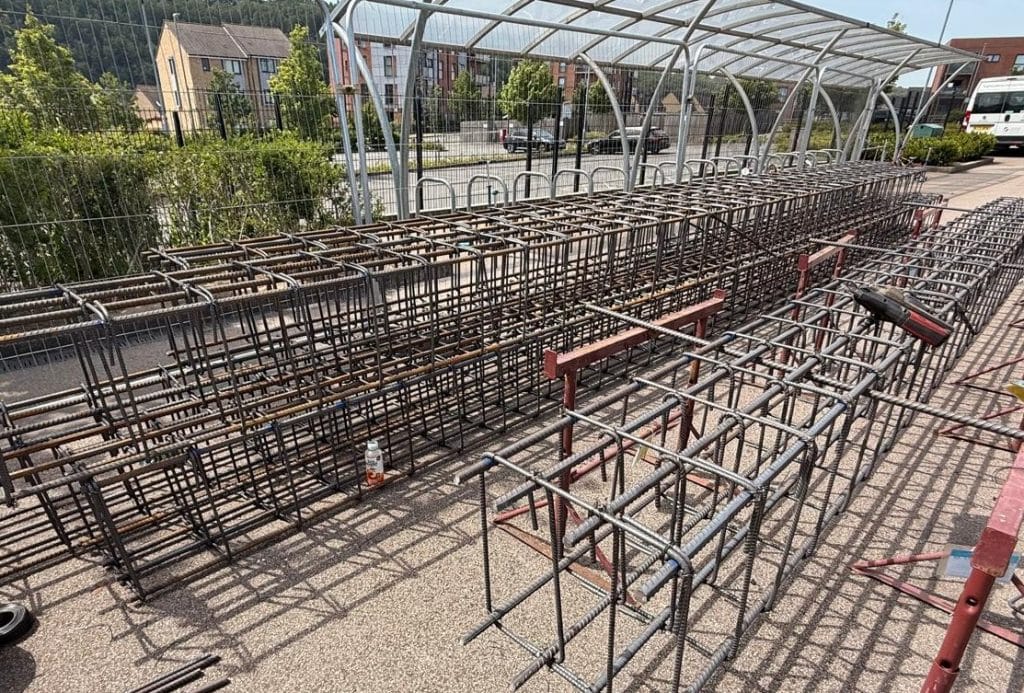
What is Steel Rebar and Why It Matters in RC Concrete Slabs
Steel reinforcement bars, commonly known as rebar, are embedded within concrete to provide tensile strength. While concrete performs exceptionally well in compression, it is inherently weak in tension. Rebar compensates for this weakness, preventing cracking and structural failure under load.
In large-scale projects such as school extensions, where floors must withstand significant daily traffic and long-term use, the role of rebar becomes even more critical.
Key Functions of Rebar in RC Slabs:
- Enhances structural integrity and load-bearing performance
- Controls cracking caused by shrinkage and thermal movement
- Distributes stresses across the slab evenly
- Increases lifespan and durability of the structure
For Cherry Orchard School, the RC slab forms a vital foundation element, supporting both occupancy loads and the overall superstructure.
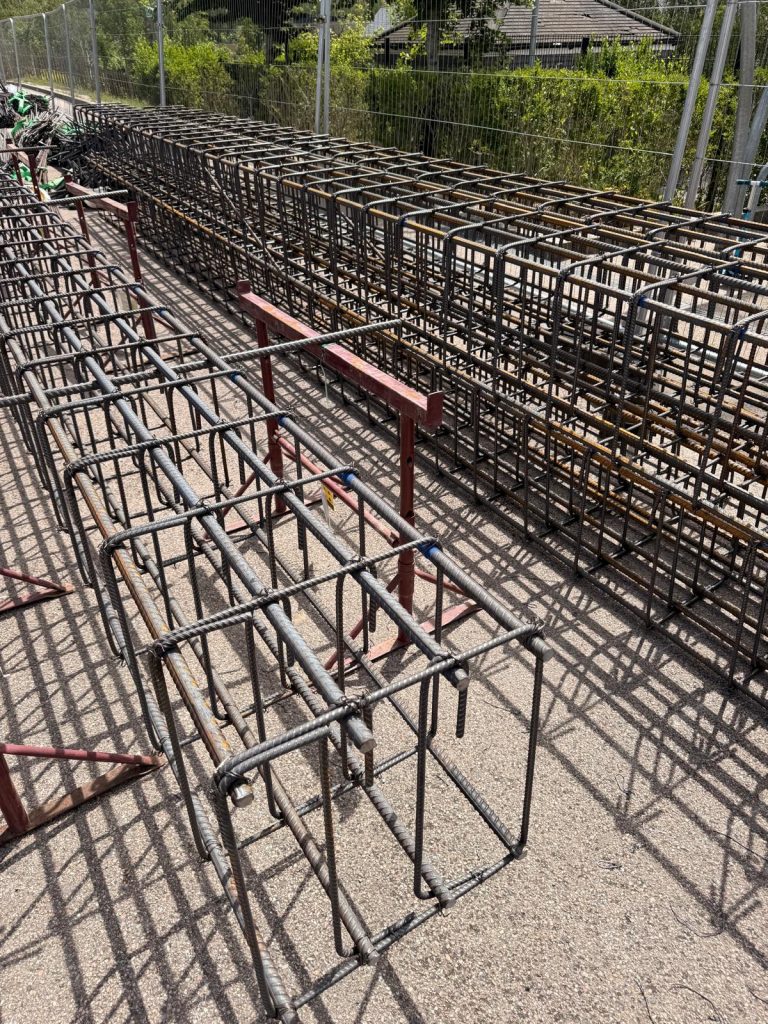
The Importance of Precision Fabrication in Steel Reinforcement
Precision fabrication of steel reinforcement is essential to ensure the design intent is achieved on site. Fabrication involves cutting, bending, and shaping rebar to exact specifications before installation.
Why Precision Matters:
- Structural Accuracy
Rebar must align perfectly with design drawings to ensure load paths are correct. - Compliance with Engineering Designs
Even minor deviations in bar spacing, cover, or shape can compromise structural performance. - Efficiency on Site
Pre-fabricated reinforcement cages reduce installation time and minimise errors. - Health & Safety
Correctly fabricated and installed reinforcement reduces risks during concrete pours.
On the Cherry Orchard School project, the fabrication process ensured that all reinforcement complied with strict engineering requirements, particularly around slab thickness, bar spacing, and edge detailing.
Coordinated Timings: The Backbone of RC Slab Construction
One of the most overlooked yet critical aspects of reinforced concrete works is coordination of timings. RC slab construction requires multiple trades and processes to align perfectly.
Key Stages Requiring Coordination:
- Steel delivery and offloading
- Rebar fixing and inspection
- Installation of formwork and shuttering
- Placement of services and penetrations
- Concrete pour scheduling
Any delay or misalignment between these stages can lead to:
- Cost overruns
- Programme delays
- Compromised quality
At Cherry Orchard School, precise scheduling ensured that the rebar installation, beam placement, and concrete pour were executed seamlessly, preventing cold joints and ensuring structural continuity.
Utilising the Right Machinery: Digger-Assisted Beam Installation
Heavy lifting and positioning are critical elements in RC slab construction. The use of the correct machinery, particularly diggers or excavators, plays a vital role in efficiency and safety.
Why Use a Digger for Beam Installation?
A properly sized digger allows:
- Safe lifting and positioning of reinforcement beams
- Accurate placement without manual handling risks
- Improved speed and productivity
On this project, excavators were used to carefully lift reinforcement beams into position, ensuring:
- Minimal disruption to already installed steel
- Accurate alignment with design coordinates
- Reduced manual strain on operatives
The careful coordination between machine operators and groundworkers ensured each element was installed correctly the first time.
Achieving Spot-On Height Installation
One of the most critical aspects of RC slab construction is achieving precise height levels. Even small inaccuracies can lead to major structural or finishing issues.
Importance of Accurate Height Control:
- Ensures correct slab thickness
- Maintains structural load capacity
- Allows proper integration with adjacent elements
- Prevents costly rework
At Cherry Orchard School, height control was achieved through:
- Use of spacers and chairs to support reinforcement
- Laser level checks and site verification
- Continuous quality inspections before the concrete pour
This ensured that the finished slab met both structural and architectural requirements.
Toe Detailing in Steel Reinforcement: A Critical Feature
Toe detailing is a specialised aspect of rebar installation, often required at edges, beams, or structural junctions.
What is Toe Detailing?
Toe detailing involves shaping or extending reinforcement bars to:
- Anchor them securely within the concrete
- Improve load transfer between elements
- Reinforce slab edges and prevent failure
Benefits of Proper Toe Detailing:
- Increases structural stability
- Enhances bond between steel and concrete
- Reduces risk of cracking at stress points
On the Cherry Orchard School slab, carefully executed toe detailing ensured that reinforcement at edges and transitions performed effectively, especially under dynamic loading conditions typical in school environments.
Managing Large Volumes of Steel: Over 12 Tonnes Installed
The scale of reinforcement on this project is significant, with over 12 tonnes of steel rebar installed across the RC slab.
Challenges of Handling High Steel Volumes:
- Logistics and delivery coordination
- Storage and site management
- Maintaining cleanliness and organisation
- Ensuring traceability and compliance
Best Practices Applied:
- Phased delivery of steel
- Clearly defined storage zones
- Pre-assembly where possible
- Inspection at each stage of installation
Handling such a large quantity of reinforcement required meticulous planning, ensuring no delays to the programme and maintaining high installation standards.
Integration with Wider Construction Elements
Integration with Wider Construction Elements
While the focus is on the RC slab, it is essential to understand how it interacts with other structural and civil components.
The project documentation highlights how concrete slabs support elements such as:
- Structural beams
- Drainage systems and inspection chambers
- Sub-base and foundation layers
For example, the design emphasises granular sub-base layers and in-situ concrete construction compliance, ensuring long-term stability and performance.
This integration demonstrates the need for coordination not just within the slab works but across all civil and structural disciplines.
Quality Assurance and Inspection Processes
Quality control is fundamental to ensuring the success of reinforced concrete works.
Key Inspection Points:
- Verification of rebar size, spacing, and positioning
- Checking cover to reinforcement
- Ensuring correct fixing of chairs and supports
- Inspection before and during concrete pouring
At Cherry Orchard School:
- Engineers conducted pre-pour inspections
- Any discrepancies were rectified immediately
- Documentation ensured compliance with specifications
These processes guarantee that the finished slab meets both structural and regulatory requirements.
Health & Safety Considerations
Working with steel reinforcement and heavy machinery introduces several risks, making safety a top priority.
Key Safety Measures:
- Proper lifting techniques and machinery use
- Clear communication between operatives and plant operators
- Safe storage of rebar to prevent trips and falls
- PPE compliance across all trades
The use of machinery such as diggers significantly reduces manual handling risks, improving overall site safety.
Sustainability and Efficiency in RC Slab Construction
Modern construction projects must also consider sustainability.
Sustainability Practices Applied:
- Minimising waste through precise fabrication
- Efficient use of materials
- Reducing rework through accurate installation
- Optimising logistics to reduce emissions
By ensuring precision at every stage, the Cherry Orchard School project reduced material wastage and improved overall efficiency.
Key Lessons from Cherry Orchard School
The RC slab installation at Cherry Orchard School demonstrates several critical lessons for construction professionals:
- Precision is Non-Negotiable
Accurate fabrication and installation ensure structural integrity and prevent costly issues.
- Coordination Drives Success
Aligning trades, deliveries, and processes is essential for programme efficiency.
- Machinery Enhances Performance
Using the right equipment improves safety, speed, and accuracy.
- Detail Matters
Features like toe detailing and height control have a significant impact on long-term performance.
- Scale Requires Planning
Managing over 12 tonnes of steel demands careful logistics and organisation.
Conclusion: Building Strong Foundations for Education
The reinforced concrete slab at Cherry Orchard School is more than just a structural element—it is a testament to precision engineering, skilled workmanship, and effective project coordination.
From the careful fabrication of steel rebar to the use of machinery for beam placement and the meticulous attention to detailing, every aspect of the process contributes to a high-quality outcome.
By prioritising:
- Accurate fabrication
- Coordinated timing
- Proper machinery usage
- Expert installation techniques
construction teams can deliver durable, safe, and efficient structures that stand the test of time.
For projects in the education sector and beyond, the lessons from Cherry Orchard School highlight the importance of getting the fundamentals right—because strong buildings start with strong foundations