
Introduction
Fry Site Services, part of the Fry Group, has recently completed a comprehensive groundworks package to support the installation of one hundred and eighty five metres of twin‑core underground heating pipework. This work forms a key part of a wider mechanical and energy efficiency upgrade, and the performance of the system relies entirely on the quality and precision of the groundworks beneath it. From investigation and surveying, to excavation, bedding, pipe installation, thermal backfill, reinstatement and final surfacing, our team delivered a complete end‑to‑end solution.
Just as importantly, the delivery involved close collaboration with the wider Fry Group. Recmat, Fry MM and Fry MEP each provided support at critical points in the programme, contributing their expertise to ensure the installation was not only completed safely and efficiently but also set up for long term reliability. These internal partnerships allowed the project to move seamlessly from one phase to the next, with clear communication and professional oversight throughout.
Setting the foundations with ground investigation
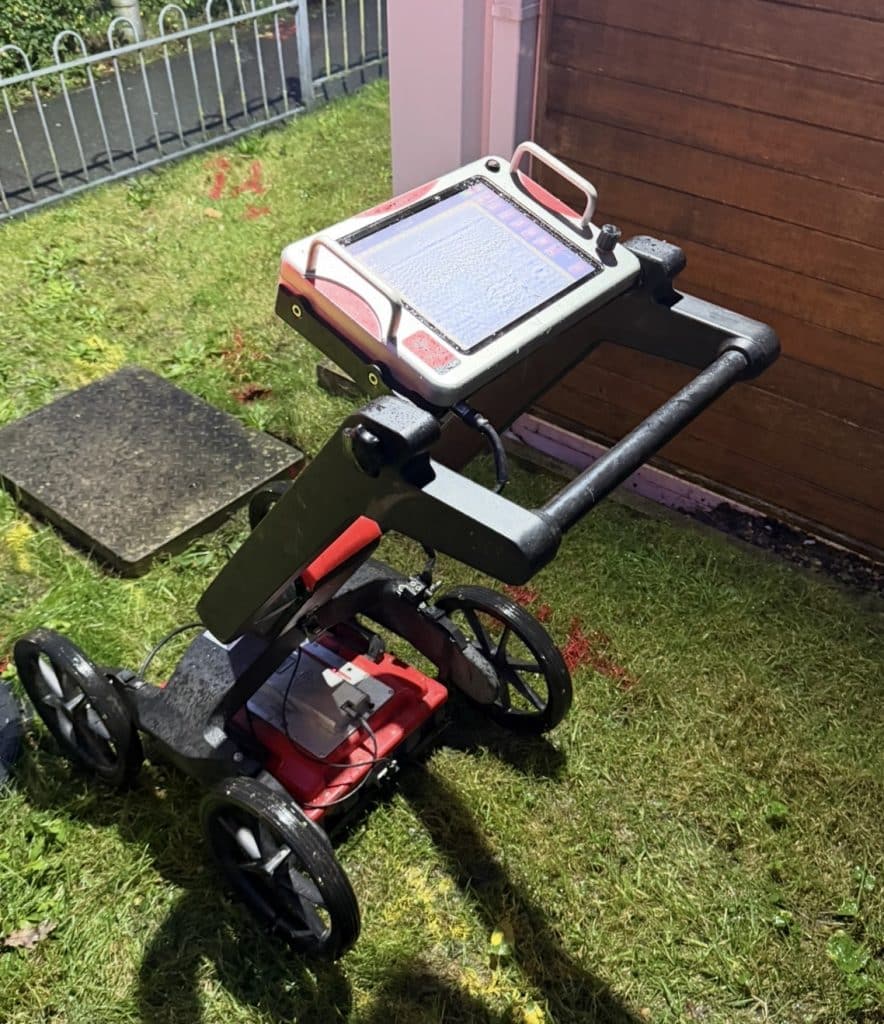
Before machinery arrived on site, Fry Site Services carried out a Ground Penetration Survey. This early stage of the project is essential when working in an area containing live drainage, electrical and communications routes. The survey identified and mapped the buried services so that the excavation could be planned with exact depth, separation and gradient requirements in mind. It reduced the risk of service strikes, protected the existing infrastructure and ensured a smooth start to the works.
The survey findings were then reviewed alongside our in‑house mechanical team at Fry MEP. Their knowledge of the wider heating layout and mechanical requirements meant we could plan the trench route with full understanding of how the pipework needed to interact with the existing plant and the proposed energy system. Collaboration at this early stage prevented future clash points and ensured that the alignment of the trench supported the mechanical specification as well as the civil requirements. Details of Fry MEP’s expertise can be found at Fry MEP.
Excavating the one hundred and eighty five metre trench
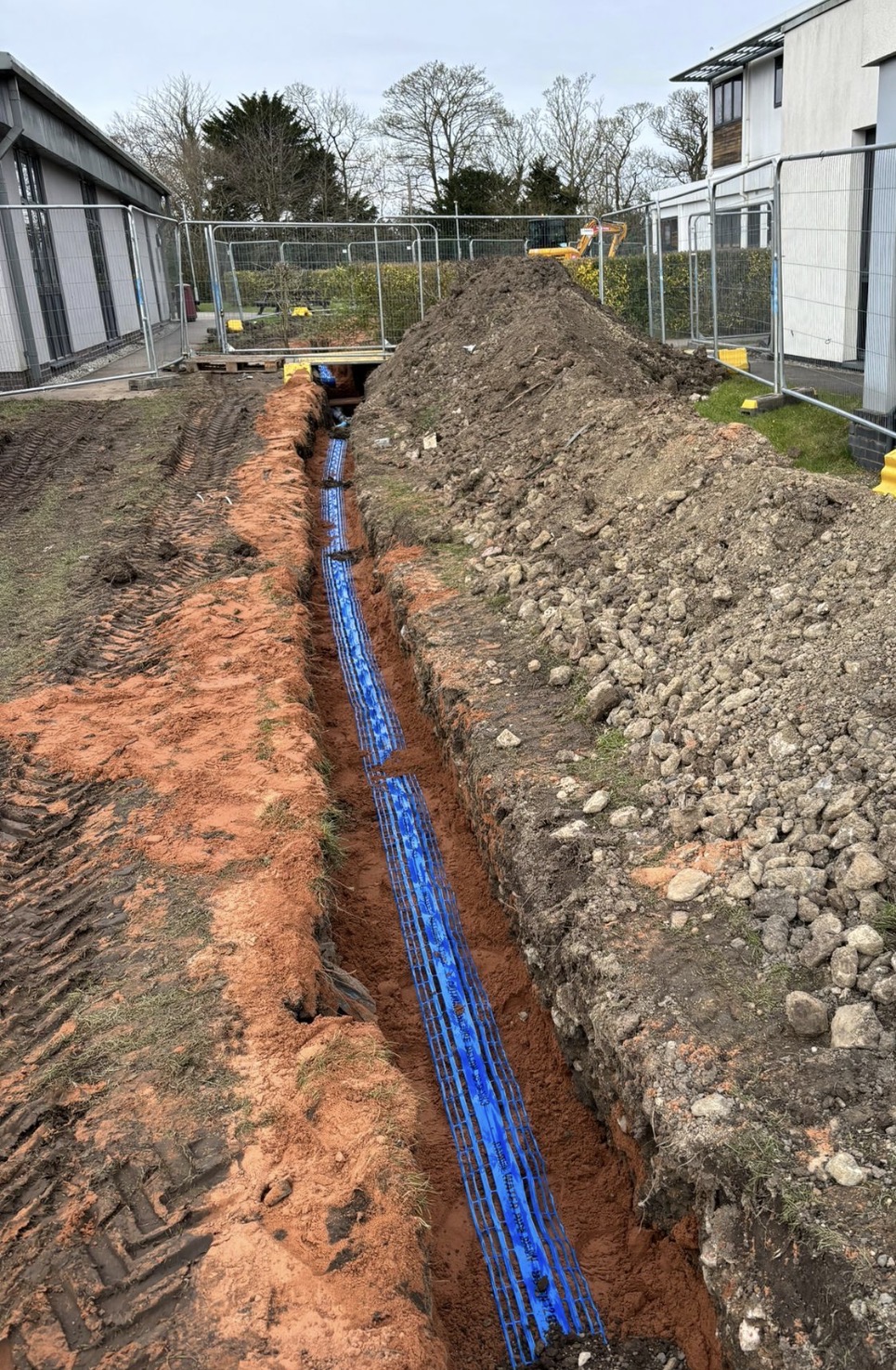
Once the investigation work was complete, excavation could begin. The trench needed to maintain a consistent depth and smooth gradient along the full route. Working in a live environment with buried services requires a steady, controlled and methodical approach. Our operators excavated carefully, shaping the trench sides to maintain stability and continually checking levels as the works progressed.
Throughout excavation, Recmat provided reliable support with material deliveries and waste removal. Their ability to supply, collect and manage materials with minimal waiting time ensured that spoil never accumulated on site and that reinstatement materials were ready exactly when needed. Their compliant waste away service, with full duty‑of‑care documentation, kept the site safe and tidy and allowed our team to work without interruption. More information about Recmat is available at RecMat.
Coordinating deliveries and removals through Recmat meant the working area remained organised and efficient, which is particularly important when excavating along such a long and narrow route.
Forming a stable trench base
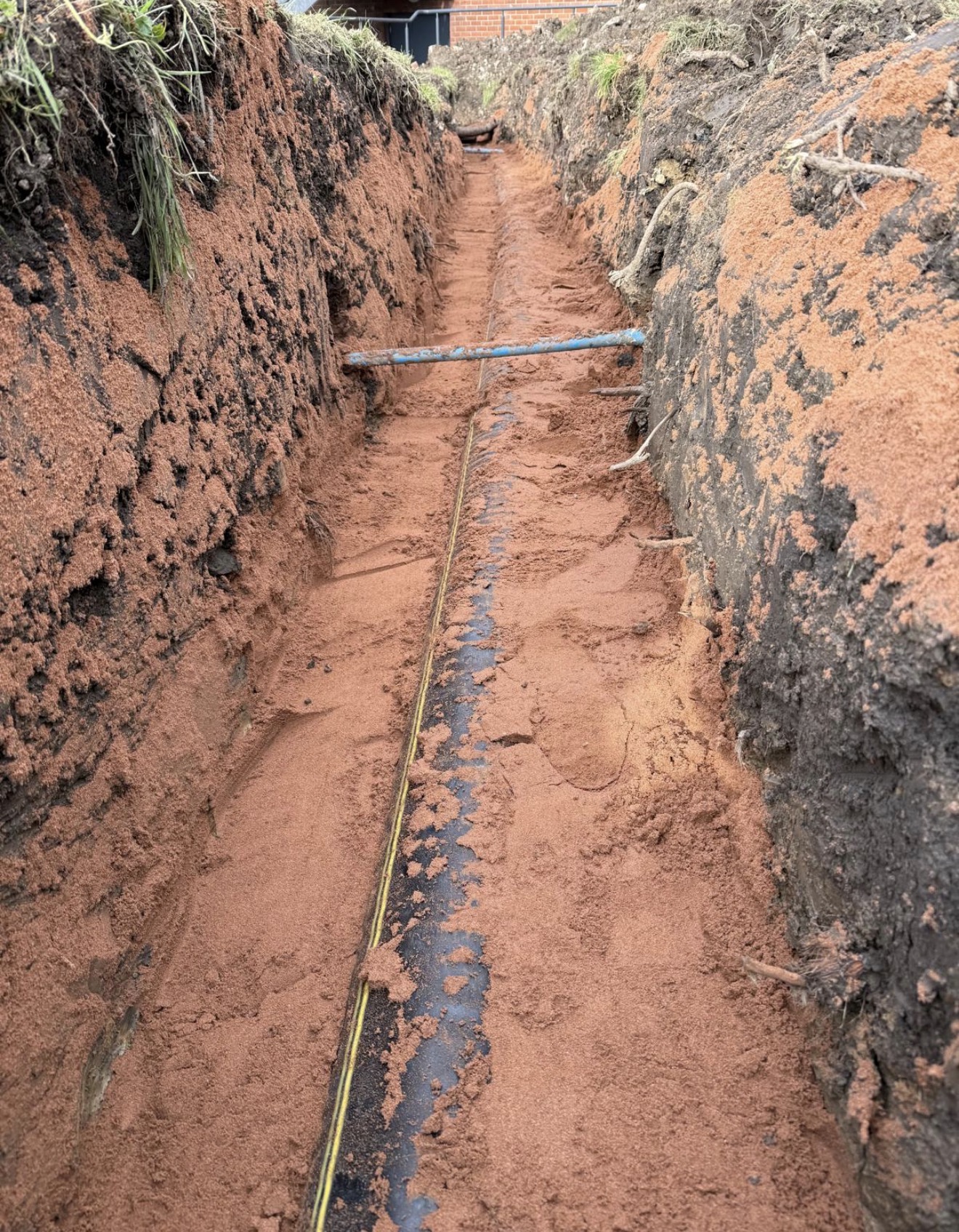
With excavation completed section by section, the formation was prepared to receive the pre‑insulated pipework. The trench base was shaped and levelled before a sand bedding layer was applied. This bedding is essential for protecting the insulation and maintaining even support across the length of the pipe. It also improves thermal performance by preventing hard points and ensuring the pipe sits in a smooth, cushioned bed.
Supervisors carried out regular checks as the bedding was placed. This helped to ensure that the gradient remained correct and that the bedding remained consistent in depth and quality across the full excavation.
Installing the twin core pipework
The twin‑core pipework, being both pre‑insulated and flexible over long distances, required careful handling. It was laid out along the one hundred and eighty five metre route and lowered progressively into the trench with mechanical and manual control. Communication between our groundworkers and the mechanical specialists was essential. Any twist, kink or deviation can compromise the insulation and reduce the efficiency of the heating system.
Here again, the involvement of Fry MEP was invaluable. Their team ensured that the installation followed the mechanical strategy for the site and that all connections and transitions aligned with the plant design. Their oversight meant that the pipework installation was not simply physically correct but also compliant with the mechanical engineering intentions of the scheme.
Protecting the system with thermal backfill
Once the pipework was in position and checked for alignment, thermal backfill was added. This specialist material protects the insulation envelope, supports the pipe evenly and helps regulate the way heat disperses into the surrounding ground. The backfill was placed in controlled layers, with each layer compacted to reduce the risk of future settlement.
Maintaining consistent compaction was a key part of safeguarding the installation. Poorly compacted backfill can lead to dips in the finished surface or movement in the pipework. By compacting in stages and checking levels throughout, the team ensured a stable foundation for reinstatement.
Managing drainage and temporary works
Open trenches require constant monitoring, particularly during periods of wet weather. Temporary works were put in place to keep the excavation dry and accessible. Water was diverted away from the trench, regular inspections were undertaken and safe access routes were maintained throughout. This attention to detail helped to protect both the workforce and the installation itself.
Rebuilding the sub base and preparing for surfacing
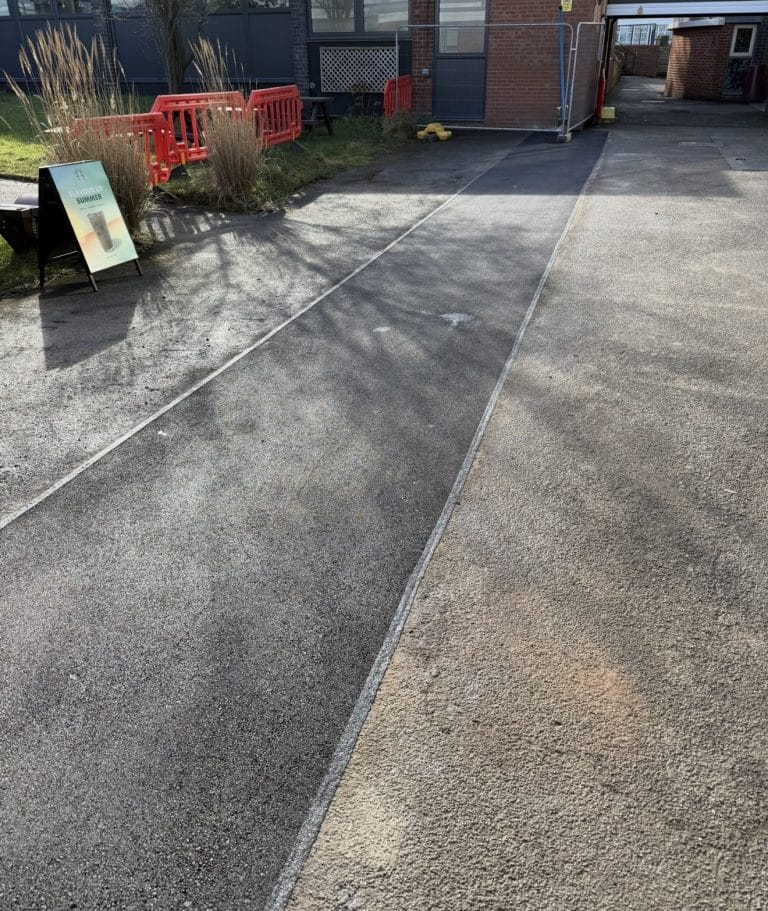
Once backfilling was complete, reinstatement of the surface began. The original sub‑base depth had to be reinstated accurately to achieve long term stability and to tie in cleanly with the existing ground. Each layer was placed and compacted in stages, with careful level checks throughout.
Where soft play surfacing was to be reinstated, a free draining open grade tarmac layer was added. This created a stable and permeable base for the specialist surfacing system above. Matching the new layer to the existing surface profile required attention to detail to ensure smooth transitions and a visually consistent finish.
Final tarmac layers were then laid, compacted and blended with the surrounding areas to create a seamless reinstatement.
Verge reinstatement and landscape finishing
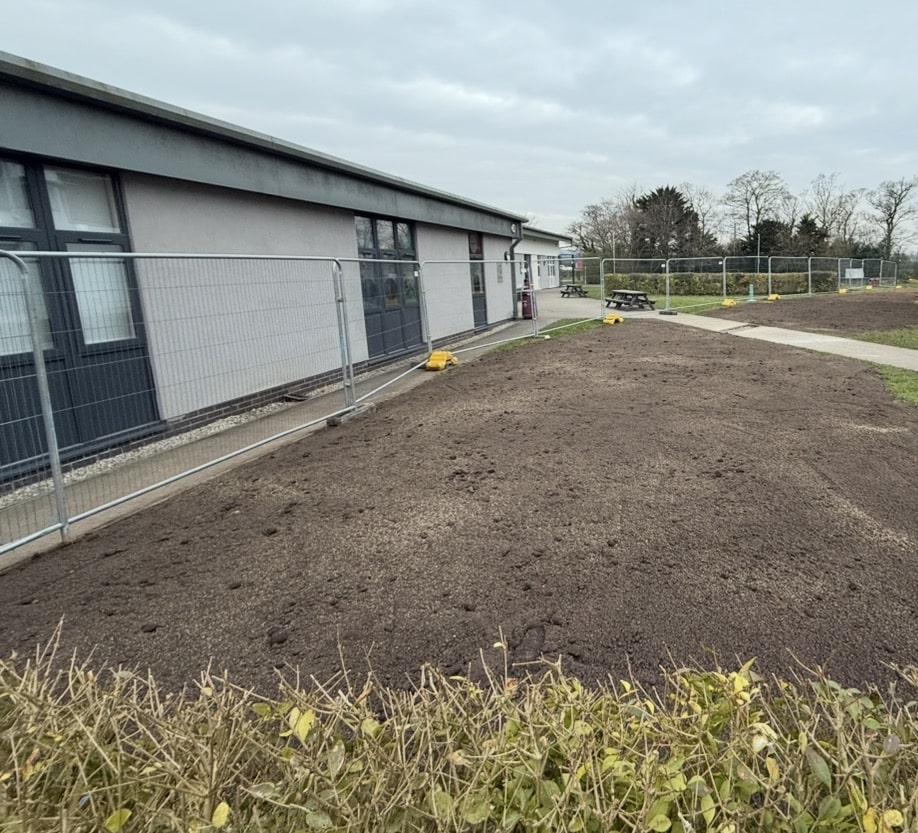
In areas where grass verges had been disturbed, Fry MM provided support with bulk material handling and reinstatement work. Topsoil was replaced, graded to match surrounding levels and prepared for re‑seeding. Fry MM’s involvement helped to ensure that the soft landscaping was reinstated with the same standard of care as the hard areas. Their capability in minor works and external reinstatement made them a natural fit for this part of the project. Details of Fry MM can be found at Fry MM.
Coordination with existing services
Throughout the project, coordination between Fry Site Services, Fry MEP and the wider client team ensured that drainage, electrical, communications and mechanical routes were never compromised. Careful planning and ongoing communication prevented clashes, supported safe working and helped maintain progress throughout the installation.
Construction of a reinforced concrete pad for air source heat pumps
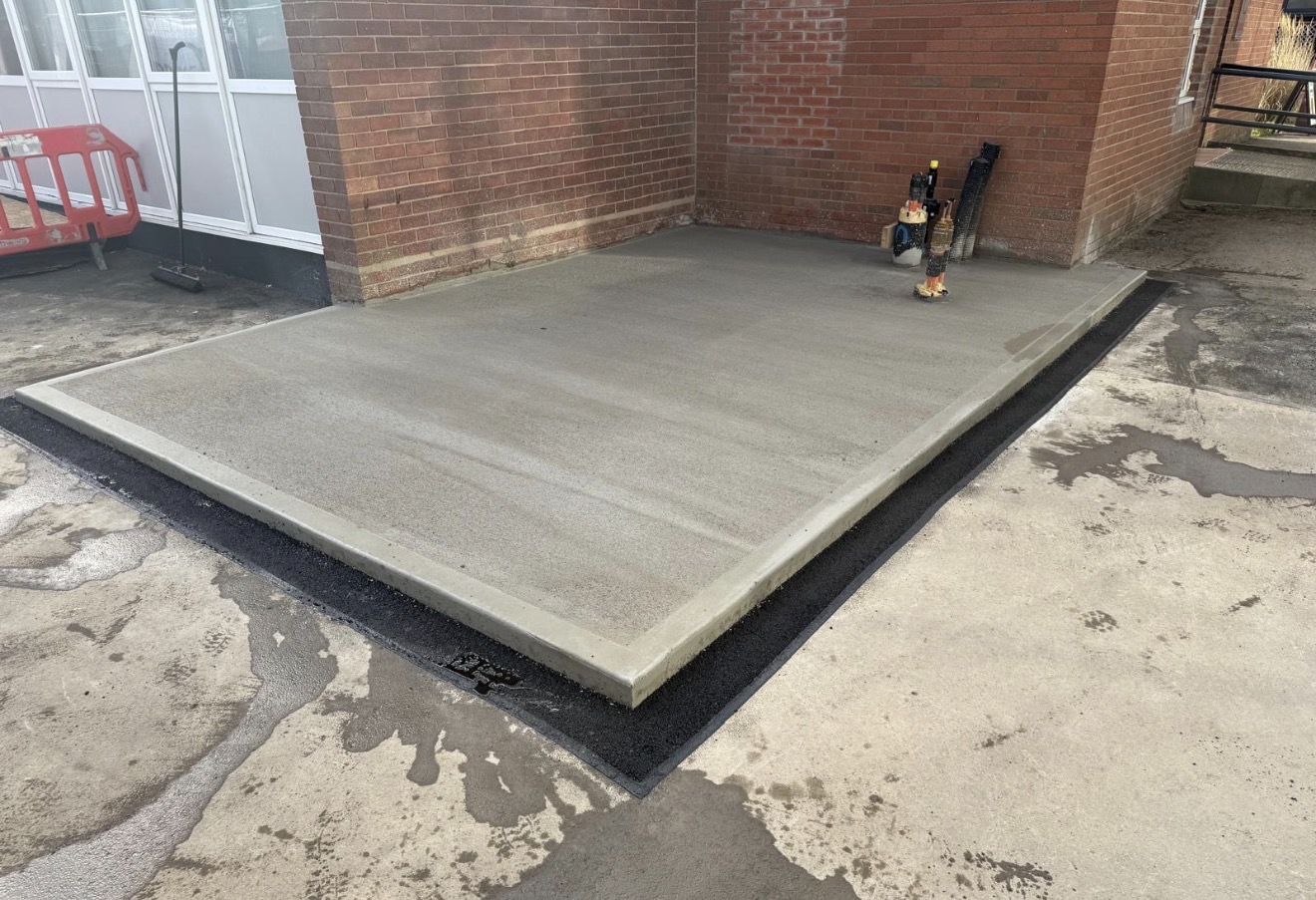
As part of the wider heating upgrade, our team also constructed a reinforced concrete pad designed to support multiple air source heat pumps. This structure ties the underground heating network into the above ground plant and will support heavy mechanical equipment for many years. Its position, alignment and strength were coordinated with the mechanical engineers to ensure full compatibility with the final plant layout.
Strong delivery and a reliable underground network
Getting the groundwork right is essential for the long term performance of any heating network. The pipework must be protected and supported. The bedding must be even. The backfill must be correctly compacted. Drainage must be controlled. Reinstatement must leave the site safe and tidy. Every part of the process contributes to the efficiency of the system above it.
Fry Site Services, supported by Recmat, Fry MEP and Fry MM, delivered the full one hundred and eighty five metre installation safely, accurately and on programme. The result is a well protected and highly reliable underground heating route that will support the mechanical system for many years to come.